I'm not against hooking up at cons, and certainly some of the advice in this article is warranted. Still, I had to stop and read #9 on this list twice before I believed it.
9) Stalk the Smaller Panels
If you want the chance to talk to a member of the opposite sex, sitting in Hall H all day isn't going to help you (although standing in line for it gives you plenty of opportunity to start conversation). Go over the panel schedule again and look for something that interests you that involves few or no celebrities. Something that promotes discussion is a plus. You'll likely be able to get a good look around a room like that and if someone strikes your fancy, wait until the panel is over and ask them what they thought of the topic. Might I suggest the "Geek Girls Exist" or "Where Are the Action Chicks?" panels? I'm slightly biased seeing as how I'm on both, but they really are a good start.
Ignore the unfortunate choice of words in the header and check out the last two sentences.
Might I suggest the "Geek Girls Exist" or "Where Are the Action Chicks?" panels? I'm slightly biased seeing as how I'm on both, but they really are a good start.
Please, please tell me this is not suggesting that straight men attend the panels on lack of female visibility in genre fiction and in fandom in order to pick up chicks.
Please, please, please tell me that this is not suggesting women attend the panels on the lack of female visibility in genre fiction and in fandom to get picked up.
I know, I know... that was a plug for the writer's panel. But you know what? If she's on those panels she should know what she just implied and why it isn't funny in the least.
I mean, seriously. Do I even have to go into what's wrong with that? Do I even have to go into that a good half of the problem of being a girl in a geek-space is that a number of men look at you as someone they can fuck without having to fake "normal"? That not a year goes by without a horrifying story of sexual harassment at a comic convention? That geek women considered unattractive are often disregarded completely because their sex appeal is more important to their male counterparts than what they can add to the conversation? That women in genre fiction are disproportionately sex objects and limited as a result? That women are considered someone the audience needs to "want" rather than "Want to be" and that that is why there are so few high profile genre heroines?
Do I have to say that suggesting the place where you discuss these problems is a great place to troll for a fuck severely undermines the discussion?
Really? After all this time do I still have to go into that? To someone considered knowledgable enough to be on panels about female visibility? Jeez.
You know what? Go to conventions. Have fun. Get laid if you can. Take care of your hygiene. Go to the stuff that interests you, and strike up conversations with anyone you can. Be honest, don't take things personally. Remember a lot of people are not there for sex, so a rejection is not really about you. It's about the situation and tastes of the person who is doing the turning down. If you should happen to meet someone who wants the same thing, at the right time, then practice safe sex and don't feel bad about it.
But above all else, you must remember one thing: Treat people like people. Men are human beings. Women are human beings. They are people. Not things. Not notches in the headboard. Not decorations for your amusement. Not toys for your pleasure. People.
There's nothing wrong with wanting or looking to have sex, but I'm not giving that advice because it will get you sex. Honestly, if you follow my advice in order to obtain sex you are an unequivocally terrible person. You should treat people properly simply because they are human beings and that is the only way to be a decent human being yourself.
I'm going to say flat out, this isn't a bad costume. It's not an exceptional costume, but it's not bad. I really do wish they'd at least kept with red and blue as the color scheme. There's no reason to do anything but give her blue, starless pants and the same top. Still, I'm not adverse to leather jackets like many fans seem to be, and I like that the bracelets match the crown, belt and lasso now. I don't like color mismatch. I'll be pretending those pants are dark blue from now on, though. I don't think this is staying, the whole matter has a Superman Blue vibe to it, but as a variant costume Jim Lee did a decent job here. Much better than Deodato did back during the 90s. And the New York Times article promises a movie in return for some messing with the costume, so I think it's a small price to pay. But then, I took the white suit era as a way to prove she was as badass as Batman, so what do I know?
(Disclaimer: I won't be able to read Wonder Woman #600 for a week or two due to shipping, so it may turn out to be the most awesome thing on the face of awesome. If such is the case, these complaints still apply (because it won't make Superman #700 good) but I retract my trepidation.)
I'm still leery of this new writer. I have fond memories of Rising Stars and Midnight Nation. I met a boy in the day room the month after I left basic who had the whole run of both up until that point and spent a pleasant evening reading comics. I kept with both until they ended. I liked his Thor okay, too. I was a bit irked that Sif was sidelined, but he had some decent intrigue and some good exchanges on in there. But his Spider-man was more full of bad ideas than good ("One More Day", for example, was a fucking horrible idea, but not as horrible an idea as the Spider-Totem), and the preview of Superman #700?
The preview for Superman #700 and the stated story idea for the next 13 issues is utterly horrifying. Superman's confronted by a woman for not saving her husband, so he responds by shutting down and moping and therefore not having anyone get saved? How many people died while Superman leaned his ass against that fucking tree waiting for the Flash? Who the fuck is this useless asshole? Where is Superman? Where is the guy who responds to failure by going into Samaritan mode and overworking himself? Where's the guy who fixes this by getting a fucking time machine, going back to help the man, and accidentally screwing up the space time continuum so he can save a life? I mean, we could be dealing with the fallout from using a fucking time machine for the next 13 issues rather than walking across country. All right, that's a little Silver Age (but aren't we in a period of Silver Age Nostalgia, DC, huh? Can you tell us some Silver Age STORIES rather than just killing off all the Asian people for it?), but my point is Superman doesn't react to feeling helpless by doing less, he reacts by doing more. The lessen he has to be reminded of time and time again is that he can't do everything. Superman's danger is supposed to be doing too much, not too little, you dumbasses. Get off your asses and get us a time machine story, you lazy fucks.
If JMS can't get the idea down that Superman is an active character, I don't know how I can expect him to make Wonder Woman an active character, and there are some items in his plan that worry me.
1) Hippolyta is dead, and that is never good.
2) The plot doesn't sound terribly innovative.
She doesn't really remember any of it, because in this timeline, it never happened, so there's nothing to remember. However, she does keep getting brief flashes of images that we will recognize as being from the Wonder Woman timeline that we know.
In a way, the person she's become is searching for the person she was ... and maybe she'll find that person, maybe she won't, and maybe they'll meet somewhere in-between.
As it stands now, Diana was taken from Paradise Island 18 years ago, when she was a child. The island was under a massive assault, and Hippolyta wanted to be sure that her daughter survived. The queen led the final defense of Paradise Island, but in the end was defeated. She and most of the other Amazons were killed, with some taken prisoner while the rest escaped to the four winds.
So Diana's task now is to a) find out where, how and why the timeline was changed, b) who did it, c) if it can be undone, and d) stay ahead of the forces trying to kill her while e) helping as many of the surviving Amazons stay alive as possible, since they too are still being hunted.
Later...
She knows her background, having been told about it over the years, but remembers very little of it herself. She knows that they're all relying on her to put it all back the way it was, that one day the Princess will return to restore Paradise Island to its former greatness, and that's a huge responsibility for her. Sometimes she chafes against it.
Also, by virtue of being raised off the Island, and other factors involving the timeline shift, she doesn't have her full range of powers. She's nearly but not entirely invulnerable, can't fly (yet), and the lasso was taken from her mother after her death defending Paradise Island. So one by one, she has to pick up these skills or powers, allowing us to examine them more closely, and give them proper weight, rather than taking them for granted.
The basic story of Diana not knowing who she is, and saving the Pantheon and her world and rediscovering herself along the way so that she can be perceived as more relatable to readers sounds an awful lot like Walt Simonson's story (Wonder Woman Vol 2 #189-194). Walt Simonson is best know for writing a much better run of Thor than JMS did, and actually making use of the kickass warrior woman love interest Sif rather than trapping her in a dying body for most of his run. The difference being that Simonson's story was temporary, and was not a complete reboot of the character which brings me to the last problem:
3. That fucking weed-whacker.
Finally, there's the problem of her being overwhelmed by her mythology and her supporting characters. When writers don't know what to do with a character, they build up the supporting cast and universe to kind of hide that fact. After a while, you can no longer see the character for the underbrush. When that happens, you need to bring out the weed-whacker to clear some of that away so you can focus on the main character.
Yeah, this would be a great point... were it not applied to Wonder Woman.
Because after Crisis on Infinite Earths Wonder Woman was the only one of the major characters who had her pre-crisis mythos leveled by her writer. Her secret identity was thrown away, her weakness was thrown away, her powers were changed, her WWII ties were incinerated. The peaceful, loving, shy Amazons who trained to physical perfection and followed Aphrodite's path of love were done away with and replaced with the reincarnated victims of male violence, who followed five goddesses but primarily the virgin goddess Artemis (later emphasis has moved to the virgin goddess Athena), and left the world of men for Themiscyra are being traumatized by the mass rape of the entire nation by Hercules and his men. Diana was born a mere 19 years before she left for Man's World, and is thus the only one who was never hurt by a man. (Yes, that's right, every Amazon except for Diana herself has rape in her backstory, and is a reincarnated murder victim. Now THAT'S the background we all want for a Symbol of a Female Power.) Diana's love interest, the original reason for her coming to man's world, was aged and turned into a father figure. (Her real father figure Hermes, the only male deity who granted her powers at birth now that Hercules has been turned into a rapist villian, propositioned her later in this run because that's precisely what we want in a story about Men Accepting Women as More Than Just Sex Objects.) He got married off to the comic relief while Diana developed a crush on the unattainable Superman, because he's the Football Captain to her Head Cheerleader status. Rather than leaving the homeland because she fell in love, she put in for Hippolyta's diplomatic mission on Athena's orders--defying her mother's wishes at the time. The love story at the core of her origin was replaced with a muddled mixture of rebellion and obediance to maternal figures. Oh, and her bright and energetic deities (Aphrodite/Venus pre-Crisis had a wickedly naughty sense of humor that came out in Diana's weaknesses, that were of course wiped away because a curse where you can't allow yourself to be bound by a man or to view a man in your super-secret island clubhouse is more harmfully sexist than raping all the Amazons) are replaced by the stiffest, most wooden creations in all of DC Comics. The script just sucked the life out of them, figuratively and literally in the case of poor Hermes (a deity who was allowed to remain dead until Rucka's run, which is fucking irritating because he's supposed to be the most fun and closest to humans of the Big Twelve/Thirteen If You Count Hestia At The Fire Which I Do). By the time they were finished with the machete and the plow, Wonder Woman had traded in the childish, subtle misogynistic themes in favor of new, improved, violent, Not For Kids Anymore misogynistic themes!
Needless to say, I have a lot of problems with the Perez run. But it was a run, it had an origin story, and it sure as hell cleared a lot of brush away and built a new world around Diana.
Which William Messner-Loeb decided to take a weed-whacker to in the 90s, by introducing a new supporting cast and retconing some of what I told you into worse shit (Hippolyta was domestically abused by Hercules and betrayed the rest of the Amazon Nation to him. Oh, and she stripped Diana of her WW title so that she could set some other girl up to die in her place because THAT is how we like our Symbols of Motherly Love).
And then John Byrne decided to take weed-whacker and a FUCKING CHAINSAW to THAT by moving her to a new city, with an all-new supporting cast...
...that was quickly discarded when Eric Luke choose to take a weed-whacker to Wonder Woman again.
Phil Jiminez built on what was there before and tried to reconcile the supporting casts, as did Greg Rucka, but by the time Rucka's really gotten going wouldn't you know it's time to trim the hedges again with Infinite Crisis and Heinberg's Lawnmaster 5000Pro weed-whacker Plus! Next door, Superman has a flourishing patch of grass and Batman's vegetable garden is winning prizes but Wonder Woman's property is a dirt lot with a few patches of green but still... they took the weed-whacker to it. And when Heinberg, who actually planted a few flowers, ran out gas they brought in the Amazons Attack Landscaping Team to get that last patch of green.
And now, after Gail Simone's leaving the garden with more green than she found in it, we hear CHUCHU-CHAAAAAUUUG-CHUGCHUGCHUGCHUG as J Michael Straczynski makes his way to the poor, beleaguered lawn. (Meanwhile, the poisonous tree of Amazon violence and victimhood twists upward in the center of the yard, without having lost so much as a pine needle.)
I appreciate the need for proper lawn care, and there is a lot about Wonder Woman's origin that I would dearly love to see retconned away (the rape backstory to each and every single Amazon, the loss of her central love interest, anything WML did to Hippolyta), but dammit DC, Wonder Woman has seen enough of the fucking weed-whacker already.
I give every Wonder Woman writer a chance and again, there are some things I dearly wish would be retconned out. I'll give JMS a chance here, and I may even like it. But his attitude doesn't really give me hope here. Still, if he brings back Steve or gets rid of the Hercules rape or the reincarnated victims of violence idea, it will be worth another destructive run.
I've been watching a lot of Disney princess movies lately, and I know we've all complained about their view of motherhood and femininity but I can't help but notice they started off pretty rocky in the way of fathers too.
I mean, in Snow White the father isn't really seen, but he has a lasting negative effect. We know that he was basically a nice guy, but he married a really horrible lady. Basically, his bad taste in women nearly kills his daughter. Granted, this might not be his fault (the woman has eerie magic powers and may have killed him after marrying him), but it still reflects rather badly on him. The Prince's father is probably still alive, but can't be bothered to teach his son proper courtship behaviors so we can assume he's not just a man of poor taste but a dick like his son, and that his wife is either equally dickish (seriously, someone should have told the brat not to just sneak up on pre-teen girls) or deceased.
Cinderella's father has the same lasting negative effect, though not quite as bad because his bad choice of a second wife doesn't try to actually kill his daughter until the third movie. We know him better too, because he gets a mention in the prologue. We know that he is kind, and loving, and oblivious because anyone with half a brain can see that Lady Tremaine is spiteful, manipulative, short-sighted and selfish. We know even the Couch Potato Prince thinks she's a chore because he yawns and rolls his eyes at her name during the ball--don't tell me that's the appearance of the stepsisters, they CAN'T possibly be the ugliest girls he's met, and she needs magic to fool him into accepting her less-awful redheaded daughter in the third movie. But Cinderella's father was probably where she got the idea that the cat and the dog could learn to get along, because he went ahead and married a woman of James Bond Villain Level Wickedness and thought she'd be okay to leave the daughter and fortune with. However, his daughter saves the entire kingdom in the third movie by preventing that horrible woman from taking political power and pissing the national treasury away on herself and her daughters so I suppose we can forgive him.
Cinderella's father may be a nonentity, but we see a great deal of the Couch Potato Prince's father. He is clearly meant to be a comical cartoon of an aging king, but when you actually think about his behavior he is a truly horrifying concept. He's the absolute ruler of the country, temperamental and obsessed with breeding his son over finding a reasonable woman to help run the kingdom. The King has gotten to the point with his son that he sees the boy as clinging to bachelorhood to spite him, his paranoia is so bad that he physically attacks the poor beleaguered Duke and accuses him of "being in league with the Prince.". (Because how dare anyone take some time to think over their prospects when choosing a lifelong companion). It's this guy who arranges it so that Cinderella and the Prince spends the entire evening isolated in mood lighting, which is actually rather fucking creepy. He repeatedly threatens the Duke with execution if the Prince's romance falls through. The Duke is so terrified of this guy that he sends the palace guard after Cinderella when she tries to make her curfew. There is a horse chase because the only girl the Prince'll talk to is getting away, and no one stops to comment on how fucked up that is. And when the Duke informs him that the girl has escaped (actual quote: "she got away"), this guy looks with naked glee upon the half-baked idea of sending the stupid shoe around the Kingdom to be tried on by every girl rather than sending the lazy-ass Prince around to look at every girl's face. The Duke points out it can fit any number of girls, and the King responds "He's given his word, that's his problem." He has no interest in making his son even comfortable, let alone happy, he just wants to find a mare that his prized stallion won't turn his nose up at and the Prince has stupidly made a promise that means he has to settle for whoever gets brought to the pen. Listen to the royal proclamation the Duke reads next time you watch, it allows the girl to back out but not the Prince. You really believe, watching this, that if Anastasia or Drizella fit the slipper that poor Prince is going down the aisle with them, wishing he'd gone around on his own rather than left it up to a shoe and his father's lackey. Unless there is something extra creepy going around where the Prince isn't allowed to leave the palace grounds until his honeymoon, which I wouldn't put past the old man.
They soften up the King a bit for the third movie, so they can make a plot point of the King being nice to Anastasia and they can make a plot point of the Prince trying to back out and needing mind control rather than just his father's tyranny. Of course, the King took a good long look at the girl at the ball and she didn't have Marvel Girl red hair, so he should've known something was up when he son said that Anastasia was the girl he danced with, but the old man only wants grandkids. None of this changes his worst traits anyway, so he remains an utterly terrifying head of state and family.
As with most Disney princess tropes, the father figures were polished enough to give a positive impression by Sleeping Beauty. They actually aren't bad rulers, to start. Aurora's father, King Stefan, issues the supremely assholish order to burn every spinning wheel in the kingdom and torpedo the textile industry in his Kingdom (I suspect Hubert did so as well in solidarity, which is why Prince Philip runs around in coarse homespun clothes like a peasant. Fine thread would be so expensive to import even the prince saves that clothing for formal occasions), but there isn't any open rebellion over this matter (though I'd wager if it was men's work that got fucked over there may have been). Not only that, unlike the other two stories it gets to be outright stated on several occasions that his subjects generally like Stefan and his family.
His dumbest political decision (that we've seen) stems from being a protective parent, but Stefan gets his biggest father points when he nearly gets into a drunken fight with Hubert because he suggests he might let Aurora back out of the marriage if it bothers her. Unlike a number of the idiotic excuses for paternal authority that precede and follow him, Stefan is actually considerate of his daughter's feelings. He understands that she's going to need to adjust quite a bit to palace life after being raised in seclusion. He's a pretty good father, despite being a bit foolish.
The other Sleeping Beauty Dad, King Hubert, is an update of the short King with an even shorter fuse that has somehow managed to produce a son of ungodly hotness. (Flora's been generous to male royal children with that beauty gift). He has his temper tantrums and that preoccupation with breeding his son as soon as possible, but he has some things going for him that the King in Cinderella simply doesn't have. For starters, his default mood is jovial and not combative. And even though he gets combative, there is no lackey terrified of Hubert like the Duke is of the King in Cinderella. The only character of lower station Hubert interacts with is a palace minstrel who isn't afraid to steal wine from both Kings before falling into a drunken stupor under the table. This sort of thing really makes it harder to see either king as a tyrant despite the stupid spinning wheel law.
The big thing that softens Hubert is how he interacts with Philip. As Philip hasn't shown any objection to the arranged marriage, they don't start the story out with a strange in-family power struggle. Philip meeting Rose/Aurora in the woods is the first bump in this plan, and naturally Hubert has a bit of a blustering tirade and tries to order his son to stop it. But either Hubert's a pushover or Philip is so independent-minded that he doesn't take his father's opinion into account even to rebel against it. This isn't so much a fight as Philip informing his father of his decision and then riding off while Hubert talks to the air. Really, in the end this is Philip's life and Hubert has to respect that. If Hubert erred, it was possibly on the side of overly lenient when the kid was younger. Considering he is a man of frightening political power and sudden displays of temper, I don't think it's bad that he's overly lenient. Perhaps a bit of a weakness, but his parenting style managed to produce the Prince that actually fought a dragon.
The Dad in the latest movie, the Princess and the Frog, was better than any of the four by leaps and bounds without even taking into account that he doesn't have the intimidating political power or the drawback of playing comic relief. Tiana's father is kind, hardworking, loving, cheerful, optimistic, gentle, and wise so naturally he passes away before the opening song. But in the prologue he's firmly established as the source of all Tiana's good character traits, and the inspiration for all her goals, simply by including a conversation rather than just a narrator saying he was kind and good. And in that conversation he gives the Best Advice in the History of Disney. There's a Hallmark Disney display with the little blocks of movie quotes on it next to the greeting cards at the store, and this advice is so good that I look for it every time I pass it. This is the Disney quote I want hanging on my wall.
"Yes, you wish and you dream with all your little heart. But you remember, Tiana, that old star can only take you part of the way. You got to help it along with some hard work of your own and then--yeah, you can do anything you set your mind to."
While this may seem an odd sentiment from a Disney corporation after years of pink princess follow your dreams marketing, and iconic movie songs such as "When you wish upon a star" and "A dream is a wish your heart makes," it's actually not that out of place. Because even though Disney marketing pushes the dream and it'll happen bullshit across the river, up the mountain, and over the cliff, and we fret endlessly about the effect this sentiment of passive wishing for things to happen is having on our children, particularly the little girls, the storytelling division of Disney has long known that this sort of thing makes for an ultimately dull movie.
Watch some of these movies, even the ones with the sappy songs driving home the dubious value of hope and wishes, and you'll find that someone has had to have some sort of skill, sense, or drive to move towards the happy ending. In these movies, Happily Ever After doesn't just happen. The heroes go through pure hell because of their own shortsighted actions before they get their wish (Pinocchio, the Little Mermaid), or someone who isn't the title character works their ass off (the Prince in Sleeping Beauty, the mice in Cinderella), or there's some horrible journey of self-discovery to endure (Mulan, the Princess and the Frog), or at the very least the main character needs to use their skills and brains to stay alive (Aladdin's got to use his wit, Snow White has to become a maid to seven bachelors, even Cinderella has to at least have the sense to keep the second freaking shoe!) in order to survive the machinations of the villain. Tiana's father just seems to be the first character to memorably voice this information (I haven't watched all the movies, so someone else may have said this but not memorably), and he's reinforced by none other than the heroine's dreamsong ("Almost There"). The song that not only supports the idea that work and struggle is necessary to achieve the dream, but that CELEBRATES it. James has instilled his daughter with such a work ethic that she's outright proud that she achieving her goal by the sweat of her brow rather than the sparkles of her fairy godmother's magic wand.
Everyone's always down on magic in fairy tales, and yeah there are certainly folktales where things just fall into place for no good reason, but in the majority of these stories--even Disnified--magic isn't a real substitute for work and skill. It was never supposed to be. Magic instead represents opportunity, and our heroes are the ones who seize opportunity and use it to achieve their dreams. But in order to make the most of that opportunity, or to even get to the point of using that opportunity, the hero or heroine has to have some sort or work ethic, talent, or skill. Her or she has to be likable/honest enough for the audience to accept them getting the opportunity (this is why Aladdin had to give away bread to children early in his movie), have spent enough of their life working that the audience figures they deserve a break (Cinderella can have a fairy godmother appear out of fucking nowhere because she worked her ass off to survive up until that point) and he or she has to be clever or brave or just good enough to take advantage of the opportunity (which can be in big things like fighting a dragon to little things like putting the comic relief you met to work as hired muscle/intimidation).
And for finally verbalizing that rule, and making it part of the moral of the story (In the Princess and the Frog, Tiana knows the value of work but needs to seize love and the opportunities presented before her in the form of a magic curse and the people she meets while under it, and Naveen needs to learn self-discipline and hard work), James may indeed be the best among Disney Dads. And that may seem like faint praise in a club that now includes Magneto but... ummm...
Happy Father's Day
(And here's one more picture of King Hubert and Prince Philip.)
It's so hard for me to be on the other side because it's not our intention. There is a reason behind it all. We don't see it that way and strive very hard to have a diverse DCU. I mean, we have green, pink, and blue characters. We have the Great Ten out there and I have counter statistics, but I won't get into that. It's not how we perceived it. We get the same thing about how we treat our female characters.
Rue McClanahan passed away. Growing up I used to seek this actres sout, and she's the reason I watched early Mama's Family and caught a few episodes of Maude, and a couple of fun PBS shows (I remember one where she was playing a Mother Superior in a group of nuns holding a telethon that was hilarious) but like everyone else I remember Blanche best. I was such a Golden Girls fan growing up. She was the picture of the vibrant older woman to me, just fun and full of life and humor about everything. It was amazing to see this kind of character in our society that's so freaked out about sex, women's sexuality, and older women's sexuality especially, let alone have her become a comic icon. McClanahan's Blanche Devereaux is reason I count characters like the Arthurian Morgause and the DC Comics Hipployta among my favorites.
All the fantasy Disney sells aside, being one of their main female characters seems like something of a pain. If you don't start out trapped in a hellish nightmare at the hands of some person who hates you for no good reason, you will soon find yourself trapped in a hellish nightmare at the hands of some person who hates you for no good reason. While this traumatic and life-altering encounter with dark occult forces is happening, you have to be nice to everyone. If you succeed in being caring and noble, you get to marry a hot guy who has a lot of money and power. Any fame or fortune you accrue on your own is written off as due to your beauty and passivity, and referenced in a lifetime of feminist essays condemning you and conservative essays praising you. Any cool stuff you do is drowned in an ocean of pink marketing. After all is said and done you don't have any real fans beyond the little girls who like your pretty dress and hair, because most of fandom better remembers the villains because you need to be a cipher that little girl viewers can project themselves onto. And your name will be inextricably linked with whatever elements in your story give the worst message about life and romance. Given a choice, I suppose I'd really rather be a fairy godmother (which has the advantage of great power without any real responsibility) or a wicked villainess (where I know I'll be going down at the end but at least it will be spectacular.) But if I absolutely have to be the Princess and go through this shit, that prince had better be fucking worth it. Sadly, a prince worth all this trouble is fairly rare even in female fantasies.
You know how stupid it is when they stick a cipher love interest, the girl with no personality beyond attractiveness that is offered up as a prize for the hero at the end of the movie into the story? Well, it sucks when they do it to male love interests too. Out of the Disney/Heroes line we don't ahve much. We have very few quality men, a couple who manage to be okay, and a few who are downright horrible. Aladdin and Hercules get top billing, so they have actual character. The Captain in Mulan struck me as a hell of a guy (he's mean at the beginning because he's a freaking Basic Training instructor), but he's a bit humorless if I recall correctly and isn't actually a prince by marriage or birth. The Disney Scale of Princes seems to range from uninteresting (You're an okay guy, Prince Charming, if only because they didn't develop you enough to give you character flaws) to douchebag (I'm looking at you, Lesser Beast--I sincerely hope Hank McCoy is coming to kick your ass in the first crossover). There's really only one guy who seems to be worth going through a fairy tale for and surprisingly enough, he gets paired off with the princess who suffers the least amount of trauma (Maleficent's scary as hell, but a little finger cut, ten minutes of mind control and a nice nap really don't compare to that stepmother who's been the only mother you've ever known trying to kill you because you're growing up prettier.)
I suppose when they decided the princess was going to spend most of the movie asleep they realized the prince was going to need to be someone worth watching. They managed it for me at least, every time I see this guy onscreen I am grinning. And even though he's like Aurora and needs to be very dignified and attractive so he's not allowed to be anywhere near as emotional and funny as the fairies or the kinds, there is just something incredibly likable about Prince Phillip. Maybe it was just relief that after the completely uninteresting princes in Snow White and Cinderella, Disney finally up and delivered a decent man. The Prince gets a personality in this film.
He gets an awful lot of personality, actually. He's super-adorable, full of life and enthusiasm for everything. He's excitable and impulsive, and 100% Angst-Free even when brooding in Maleficent's dungeon. He's had his entire life planned out since birth, but it doesn't seem outwardly to weigh on him. When he decides against following the Plan to marry that princess he's never met in favor of trying for the cute peasant girl with the really nice singing voice, and tells his father he doesn't come off as rebellious or confrontational. On the contrary, he's very cheerful and affectionate, and doesn't even bother to argue with the old man. He's also allowed to be frightened, discouraged, and humiliated. When he first shows up, he's a little boy making a face at a baby and he seems to retain some of that boyish quality over the next sixteen years. He approaches life with an upbeat sense of humor. When you meet him as an adult, he gets thrown from his horse into a puddle (he was trying to follow that wonderful singing he heard in the forest) and takes it in stride. And when he's drying off and a bunch of Aurora's animal minions steal his coat, hat and boots he takes that rather well too.
The first meeting scene is fascinating to me, and it was never because I liked the song. It's the interaction here. Aurora's caught with stolen goods. Phillip does the creepiest thing possible, and then actually manages to recover and befriend her. And I don't mean the writers just have her be charmed by him being a jerk, I mean he manages to pull out some serious diplomatic skills and switch to the right foot after starting off on the wrong one.
I'll give you that here it helps that the audience knows his story. Initially when he heard the singing, he set out to try and find it but was thrown into a stream. While drying off he sees some of his clothing literally walk away from it, and follows it to find the singer he'd been curious about before. So we know from the start he's not just a pervert who wanders the woods looking for strange girls, but Aurora doesn't.
I love how he does that thing where he sneaks up on her in the forest and starts to dance and sing along with her, and then immediately apologizes when he realizes she's scared. The way I read the buildup and approach is that he mistook it for her specifically playing a prank on him (what would you think if your clothes walked off while you were bathing and you found someone dancing with them?) and tried to prank her back a little. But Aurora hasn't actually thought about where the men's clothing came from, and is so wrapped up in her fantasy that she doesn't even notice when she's caught by an actual human dance partner instead of clothing animated by a couple birds. She is just stupified when she hears "Mr. Owl" singing in a human voice. When she pulls away Phillip realizes he's completely uninvited here, has inadvertently done some incredibly creepy and intrusive, and has to perform some damage control while angling for an invitation. He apologizes, goes out of his way to appear nonthreatening, and serenades her with her own song. He never once asks her why she took his clothing, or mentions it. He doesn't make excuses beyond "I didn't mean to frighten you." (He still smiles a bit too much when telling her that. He was anticipating startling her a little bit, just not so much he'd ruin her day.) He's got every right, mind you, to just stop and hold out his hand and demand she give the items back but if he does so he destroys her game and takes over her territory. So rather than be overbearing and change the rules to suit him, he presents himself as a part of her fantasy, willing to go along with her rulebook. Notice that he doesn't add his own lyrics to the song, or change the tune. He just sings what she's been singing, in a male vocal key. He's signalling her that yes, he's bigger and a stranger and armed but he just wants to join her, he doesn't want to spoil her fun.
The whole scene is a dance (I wouldn't be surprised if it were adapted directly from the ballet, which I've sadly never seen) where he tries to retain her attention without frightening her again. Phillip's a prankster sort of character, overly eager and thoughtless at times (later in the movie he picks his father, a very short King, off of his feet and dances him around until the old man yells at him), but he seems to understand that it's his fault when he crosses a boundary and that it's up to him to change his approach and defuse any potential harm. And while this should be the bare minimum standard of behavior for men of all walks of life, we're looking at a person of royal birth interacting with a peasant (as far as he knows) in the 14th Century. Watching Phillip empathize with and charm Briar Rose the peasant maid he found with his missing boots by playing her game tells us a lot more about Phillip than watching him empathize with and charm Aurora the princess by playing her game.
Of course, my impression here may be affected by the other example of an early Disney Prince following that beautiful song to meet the singer. Phillip is considerably less threatening than the Prince in Snow White, who climbs over the wall to her house, doesn't apologize, and then proceeds to sing his own song about how much he loves her at her window.
I saw that for the first time as an adult, overlooked the few seconds with the white horse, and didn't recognize the prince as the guy climbing over the wall. I thought for a second the Prince was going to meet her by saving her from the creepy robber guy who climbed over the wall into her private garden. But no, that's the Prince, armed, vaulting over the wall and sneaking up on a pre-teen girl with a really eager smile, then chasing her into her house. I can only conclude that he's kind of a dick. He seemed almost gleeful when he asked if he frightened her, and he moves forward when he asks. He doesn't seem to take into account that he is older, much taller, armed, and looks to be of a different class.
But he has the Magic Singing Power that charms birds and potential spouses so this doesn't hurt his chances with her.
Snow White seems a lot more frightened than Aurora does, probably not just Snow White's Prince comes on extra-strong but he's a nobleman in full finery chasing some poor servant girl in rags. Aurora's prince is at least humbly clothed enough that the girl he's approaching isn't struck by a terrifying feudal class gap (mistaking royalty for peasantry is probably easy when everyone is clad in the course kind of clothing you get when your asshole of a king bans the latest in fiber-making technology). Snow White's prince doesn't adjust his posture or draw back to signal he's not a threat, or continue to play according to her rules. He calls for her to come back and then changes the song. He tries to take command of the situation rather than let her set the rules and boundaries.
Prince Phillip, having the benefit of a couple decades thought on what sort of hero little girls might like, approaches Aurora on her terms even when he missteps. Both heroes intrude on the dreaming heroine, but Phillip adjusts to Aurora's dream. And while Phillip's quick apology keeps it so the girl is just startled and doesn't run away immediately, eventually she does run off when she realizes how much time she's spent out in the forest and that her "Aunts" are waiting at home. Phillip handles this better than the other prince, too. He runs after her to keep within earshot, but stops at each barrier (a tree branch, a stream) and calls after her rather than trying to overtake her. And since he didn't just scare her off earlier, she changes her mind when he asks for clarification. ("When will I see you again?" "Never, never!" "Never?" "Well, maybe someday" "When, tomorrow?" "Oh no, this evening." -- Aurora's a bit spacey. Not stupid, mind you, I think she's smarter than the godstooges. Just spacey. I like her.)
Now, we do have to take into account when analyzing both these meetings the Laws of Disney Love. The First Law of Disney Love states that only True Love can break spells like these. As in any fairy tale, there's a strong implication of the hand of fate in these meetings, that this ignites a spark of True Love. True Love is the necessity of the spell, and while even in fiction I've rolled my eyes at the "one destined mate" interpretation, the "True" part certainly means that there is no greed or jealousy or self-glorifying objective in mind. That either Prince could break the spell tells us his interest in the girl goes beyond a roll in the hay, he's genuinely interested in her as a companion. So dickish as Snow White's Prince is, he's got decent intentions but handles them badly. He's not evil, he's just a jerk. But he has mind control singing powers so he doesn't really need social skills. I wouldn't marry him, though. (And judging by the Wicked Queen's reaction, mean old witches are immune to mind control singing powers, so I'm good there.) Prince Phillip is much, much better with people so he comes off as a better catch, so to speak.
That's not to say Phillip wasn't one of those guys with just one thing in mind. Marriage. He's approaching her on her terms but he fully intends to coax her into his world, and he reveals that when he gets back to the castle. He announces to his father, King Hubert, that he plans to marry a peasant girl he met that afternoon and is meeting again. So, Phillip's ultimate goal is marriage while Aurora is just happy to meet a nice boy at the moment. I will say that I can see where they are both coming from. Aurora is unaware that she's a princess promised to a man already so she sees nothing but an open and optimistic future. Phillip's life has been planned out since birth, and if he wants to take control and direct it he needs to be decisive and present his father with a solid alternative. He can't just say "I met a nice girl I'd like to court" in this case, he has to have the long goal in mind to justify tossing away his father's plans. So he's got a goal he hasn't brought up here, but he's not so much deceiving her as waiting until they know each other a bit better to bring it up. It is not a harmful goal to her, his motive is fairly understandable, and he's being pretty considerate of her situation.
In real life I would call it pretty offputting to decide right away you're going to marry someone, but taking into account Phillip's situation, the time period and that the Second Law of Disney Love states that you get only one song to decide you want to spend the rest of your lives together, I'm willing to accept this here.
Phillip's got a lot going for him but his biggest strength is his people skills, and he's certainly a social person. He's re-introduced to use at the "16 years later" mark bribing and joking with his intelligent (and non-speaking) horse. Most of his humor comes through interacting with the horse and defusing tense situations with Aurora and his father. He knows exactly what he needs to say to them. More impressively, Phillip knows exactly when he needs to keep his mouth shut, as when dealing with Maleficent in a situation that I'm certain launched a thousand bondage fetishes. He doesn't try to trick her or talks his way out of it, or even insult her (though she does make him angry enough to pull against his chains). It's obvious that anything he says can make things worse for him, or even reveal information that she can use against him and his family. When he gets rescued, he keeps quiet rather than look a gift stooge in the mouth and sets to action.
I really like his design. He's more angular and masculine than the previous princes but a bit softer than the modern wave. Otherwise he's got this really earnest, innocent face. He has an earnest smile he reserves for Aurora and the King, a very innocent and sweet look. And then he has this mischievous smile that reminds me of Harrison Ford in Star Wars. He also gets to blush, be annoyed and do all these "oh shit" reaction shots when fighting Maleficent.
We like to make fun of Phillip for getting help against Maleficent from the Fairy Godstooges, and don't get me wrong, they were the driving force for good in the movie and the reason he made it, but he did put in an incredible amount of effort there. They arm him, but he's the guy who's probably never fought in his life but uses the weapons competently. He fought the goblin guards en masse without help (it took a ton of them to catch him unarmed in the first place while Maleficent watched him beat them up, must be a fairy thing) until they started with ranged attacks like boiling oil, tumbling rocks, and loads of arrows. He went through the thorns alone without getting help until his cloak got caught. Then when Maleficent showed up, the godstooges got cold feet and booked it (except Merryweather, who got pulled back from helping him because apparently fairy lives are more important than human ones) and he stands up to her alone for way longer than he should have been able to. She basically pummels him with fire repeatedly, driving him to a sheer wall (which prompts a little advice from Flora, but not any sort of levitation or protection), then to the edge of a cliff. When she takes out the shield and scares off the horse, then they come foward to enchant the sword and give him a bit of help. The character is brave as hell and a pretty badass fighter. I think he edges out all the modern princes except Hercules in this territory too. And he gets points for standing up alone to freaking Maleficent while much more powerful people ran away from her.
Phillip is a pretty straightforward and positive character but he does have one flaw that's not immediately obvious, and is very important in the story. His father Hubert, who in the previous scene had been willing to take out a sword at the thought that Stefan was going to let his daughter back out of the marriage deal (and I bash Stefan a lot, but he is a considerate father who realizes that Aurora's going to need some serious adjustment time), doesn't really do that much to stop Phillip from calling it off. He orders him to marry the girl, gets laughed at, then feebly tries to chase his son's horse down the courtyard to get him to talk it over. Then he sighs and goes to tell Stefan it's over with. Then he's utterly shocked to see Phillip and Aurora at the end. He's dumbfounded that Phillip seemed to have changed his mind. Earlier, Maleficent predicts that after 100 years in the dungeon he'll still go out to free Aurora. And not only that, this guy goes right from escaping the Forbidden Mountain to cutting down the thorns and trying to fight through a fricking Dragon to get at that girl. This is, of course, all evidence that Phillip is very much in love. This is also evidence that Phillip is one stubborn son of a bitch.
I am absolutely certain, from these traits, the lack of a curse placed on Phillip, and Hubert's appearance that Phillip also got gifts from the faeries.
"I give the gift of Beauty."
"I give the gift of Cheer."
"I give the gift of Courage."
"And I give the gift of Obstinance."
"Ah, yes... Thank you, Mistress Maleficent. That is just what I wanted in a son."
"Psst, Leah... leave her off the invite list when we finally have a child."
In this corner, wearing the purple and black villain robes, hailing from the Forbidden Mountain, the reigning Champion of the Fairy Dueling circuit for SEVEN HUNDRED YEARS running! The Ruler of Rue! The Sovereign of Spite! The Queen of Mean HERSELF! The one! The only! The MAGNIFICENT... Maleficent!!!
And in this corner, wearing the red, green and blue... elderly... lady robes, hailing from the... Garden of.. Innocence, our challengers! The Witches of Wonder! The Steadfast Sweat--no, wait that's Sweet.. The Steadfast Sweethearts! The Helpers of.. Happiness? Who wrote this?
Eh, forget it. Meet Flora, Fauna and Merryweather.
These three are are the three Good Fairies who were invited to the christening (because they're somehow more fun and fashionable than freaking Maleficent? What the fuck? That's like inviting Carrot Top instead of Frank Sinatra), and who assist and direct Aurora and Philip's fates towards the necessary happy ending. They're very likable because they are well-intentioned, cute, and funny little old ladies. I believe most watchers initially write them off as sidekicks because they aren't the Prince or Princess, and they supply much of the humor in the movie, but the truth is these guys are our Protagonists. They are the ones with the power to challenge Maleficent, no one else can. Not the Princess, who is well-removed from the action during this. Not her parents, who are completely helpless during this whole mess. And not the Prince, who is heroic and lovable, but would have died a dozen times in the final sequence if not for Flora's magic. The majority of the movie follows the actions and viewpoint of the three Good Fairies, and though you're led to empathize and root for Philip and Aurora they aren't spotlighted and developed nearly as much as the four fairies. The entire story is Maleficent and these three trading magical blows. It's a duel. The Princess is Maleficent's weapon of choice, an emotional blow, while the Prince is a physical weapon that Flora, Fauna and Merryweather use. Flora arms the Prince, sends him to the tower, saves him from Maleficent's goons and landscape alterations, and enchants the sword (that she gave him) in the final scene. It's possible didn't even need to aim. Instead, he's aimed BY Flora after being picked up and loaded.
That's right, the Prince and Princess in this movie amount to a pair of dueling pistols, and the protagonists are actually the comic relief/mentor characters. Is it any wonder I love this film?
This is a serious underdog setup. These women are very powerful and good-natured beings, but they are so abysmally stupid it takes all three to stand against Maleficent. It's arguable they cause more harm than good to the royal family and the kingdom in the long run.
No, I'm not being too harsh. I love these characters, they are pleasant and friendly and great for a laugh without descending into Annoying Sidekick territory, but they are horrifically stupid and you can tell from the start. They state that they can only give one gift apiece, so naturally you'd think it better count. The first gift is given by Flora (the tall one in red), self-appointed leader and most idiotic of the group. She gives Beauty.
Now Beauty is a pretty stupid and frivolous gift to begin with. It is almost always only ever given to girls. (I think Flora also gave it to Philip, though.) To an extent it makes sense, because Beauty gives her family something to bargain with at least. A beautiful girl can fetch a husband with lots of land and increase the family's fame. Except Aurora's already fetched a husband, they appointed one the second she was born. So the little bit of usefulness from beauty is not so useful even in this case.
But no, in this case Beauty is even stupider than it sounds. Why?
Meet Aurora's mom.
Now there's a small chance she might look like her father, but really... was it really necessary to make absolutely certain of that beyond making her intelligent or lucky or superstrong or I don't know, invulnerable to sharp pointy objects like spindles?
So right away Flora lets us know that she's as dumb as a bag of rocks. The other two still follow her, possibly because she's the largest and the oldest. Flora does seem to have the most courage and responsibility of the group. She is just so unbelievably superficial, though. She may be the most powerful of the group (at least she's the one with the courage and ability to use her powers during a crisis), but she gives the gift of Beauty.
Fauna, in the green, might be the best of the lot. She's the quiet one of the group who likes children and taking care of others. She avoids conflict while Flora and Merryweather bicker in the background. She usually only speaks to try and calm one of the others down, encourage them or coo over babies and cooking and other sweet little old lady interests. I worry that if she hadn't been allowed to take care of Aurora she'd have stolen someone's baby and replaced it with a shape-changed rat. (Seriously, she tries to burp cake batter while she's reminiscing.) She gives a more sensible gift in song, which manifests as the standard Disney Princess superpower where you can attract animal minions and potential husbands with your Siren's voice. Snow White has her animal minions to find shelter for her, Cinderella gets mice to sew her dresses and Venus in Agents of Atlas can stop wars. Aurora just has the animals steal stuff.
Merryweather in the blue is probably the smartest of the group, but her temperament is akin to Buttercup of the Powerpuff Girls. (Come to think of it, Flora parallels Blossom and Fauna parallels Bubbles.) Not very good for leadership. She complains mostly. She's a bit cranky and always ready to mix it up with Maleficent. She blurts out in the first scene that the reason Maleficent wasn't invited was because she wasn't wanted (and again, why the fuck would you not invite her? She's got Style, wit, and the vindictiveness to fuck you over badly when you snub her), which can't possibly have helped matters. We never find out what she considers an appropriate gift for a newborn, because she's the one who has to cast the counterspell that mitigates Maleficent's death-curse to just a long sleep.
Filling out the hierarchy of intelligence in Sleeping Beauty, I'd put Fauna and Merryweather on the same rung, a step above Flora. Unfortunately, Flora is the leader because she takes initiative. She's always willing to do something, and it's usually something stupid. After they try to lessen Maleficent's curse, they have a little meeting and some tea. Flora's first idea is to turn the girl into a flower, because that's certainly less vulnerable than a little girl is. Ultimately they decide on Flora's second idea because no one else has anything to offer. See, rather than raise her in the palace surrounded by guards and living a life of luxury where she'll never find herself in the same room as spinning equipment, the safest thing according to Einstein here for Princess Aurora is to live as a peasant girl raised by the Three Fairy Godstooges in the middle of a forest where she can get into all kinds of shit. I suppose that wouldn't be so bad, if the girl was properly warned. But rather than tell her that someone wants to kill her and she needs to avoid Viking Vampire Batwomen, any form of magic that is glowing green, creepy looking ravens, and spinning wheels, they tell her NOTHING except not to talk to strangers.
How they intend for her to meet the true love who's supposed to break the spell if she's not allowed to ever talk to a stranger, or she's never to meet her intended husband until after the 16 year mark has passed I'm not sure. But this is the plan they go with, and apparently it's successful because Aurora makes it to the appointed day without being killed, found by Maleficent, or ever speaking to a stranger. Or at least anyone stranger than she is. (More on Aurora later.)
Of course, after 16 years of living as a mortal without magic, Fauna has never learned how to bake and Flora doesn't know how to sew a dress. And Aurora looks exactly like her mother except with a lighter shade of hair, so good use of a blessing, Flora.
Now Maleficent set a spell deadline of sunset on her 16th birthday. Flora's plan is to hide the girl until it's safe, and so far it's worked well. So, do they wait an extra day to bring her to the palace? Do they wait at least until AFTER dark to leave the cottage? No, they bring her to the palace about 30 minutes early so that Maleficent can lure her to a spinning wheel and get her by the deadline. Oh, and those idiots send her off alone to pick berries, and then leave her alone to cry, on the day that a sensible person would be watching her like a hawk because they've reached crunch time.
Not only that, they make it 16 years without using their magic and can't wait another fucking day before fighting over the color of a freaking dress and attracting the attention of Maleficent's pet raven.
Nevertheless, stupid as they are, they and Maleficent are the movers and shakers in the film. The humans can't do really anything. So Sleeping Beauty--the movie where the heroine spends not even 20 minutes awake during the film--turns out the be the movie in the Disney line that has the most active, powerful, and influential female characters. It has one hell of a female villain, and her true challenge comes not from the brave hero or the meek princess, but from three energetic female characters of equal power.
Not only that, they managed to develop and give screen time to the male love interest in this movie. He turns out to be one of the most likable and least douchey princes in the Disney line. Amazing what you fit in there without wasting all of your time on irritating sidekicks and princess angst.
One of the few light Disney movies in my horror-loaded DVD collection is Sleeping Beauty. I've been fond of this one since I was a little girl, even though the joke is that the heroine spends the entire movie asleep while the Prince does everything. But the makers of this movie found a way to remedy that and get the little girls in on the action in this story, and in doing so they created what must be the most memorable villain Disney ever produced: Maleficent.
I had a greater than average interest in fairy tales even for a little girl, but princesses never came close to the top three appealing aspects of fairy tales for me. My imagination as a child was ruled by a triumvirate of Fairies, Witches, and Dragons. (Cats came in fourth.)
Maleficent is a Fairy Witch who can turn into a Dragon, which has to be the Greatest Parlor Trick in History.
And she has Style. (I like Style.) Check out the Viking Vampire wardrobe. She's the Fairy Godmother from Hell and is not afraid to look the part. And on top of her black and purple super-batbitch ensemble, she's got green magic energy and a wicked looking pet raven on her wicked looking magic staff. And the makeup, from the eyeshadow to the lipstick it just screams Mistress of All Evil. It's so perfect. The sort of villain that makes you think "If I ever fall from grace I want to look like HER when I land." I don't know of anyone who as a little girl didn't freaking adore this character.
Her powers don't stop at Divine Fashion Sense. She can turn into into a dragon, teleport, call upon the powers of Hell, turn into a freaking dragon, send a frost, show the Prince a holographic light show, turn into a fricking dragon, blast people with green sparks, put people into a trance and compel them to do things like touch spinning wheels, oh and did I mention? She can turn into a fucking dragon!
The whole story happens because Maleficent, who apparently has a thing about being left out, isn't invited to a big party celebrating the birth of the local princess. All the other fairies get to go, but she didn't get an invite so she's pissed off, and so she decides to act out every nerdy girl's revenge fantasy and show up to scare the shit out of the popular kids. She gets in before the third fairy gives her gift, makes everyone horribly uncomfortable, forces them to admit she was purposefully uninvited, and curses the brat to die at the tender age of 16. In doing so, she freaks out the King, she freaks out the Queen, she prevents the third invited fairy from giving a proper gift (thus depriving the princess of two of the four gifts she would have been entitled to if Maleficent had gotten an invite--and no doubt Maleficent would have given one hell of an interesting gift if she wasn't pissed off), she scares the King so badly that he destroys every spinning wheel in the kingdom causing hardship for anyone who wanted to make clothing, and she sets it up so that the Princess isn't properly raised and trained as a ruler when she comes of age. And when the time comes to cause the curse, she manages to enact it, freak out the girl, traumatize the fuck out of the Prince she marries (watch him after the big battle, he's got a light smile but his eyes are really wide, and he doesn't want to explain anything that happened to his father--I think he's pretty shellshocked), and destroy a good amount of the scenery. All while looking fabulous beyond measure.
Not only that? She is apparently killed by falling down a cliff. She falls down a cliff and there's a scene where purple and black smoke rises up from the bottom and the Prince looks over the ledge to see not a big dragon body or a slender fairy witch body, but her cloak with a sword through. There is no body at the end of this movie. They even do a scary close-up on it. The woman physically transforms into flying creatures and green light, casts illusions, and teleports, but the other fairies act as if she's dead after falling down a cliff, sending a cloud of purple and black smoke upwards, and leaving no body. Idiots.
Now she does have some pitfalls. Turning into a dragon was scary and all, but if she really wanted to fuck up the Prince she'd have gone with a molten liquid, a choking gas, or some illusion to separate him from the fairy helpers (because she can change into gaseous and energy shapes). Flora saves Philip from several ranged attacks during the escape, but none of the Fairy Godstooges dare to directly counter Maleficent's spells, so this could been something they couldn't counter in time. She captures the Prince but doesn't kill him (in her defense, I suppose that some other destined true love might've popped up without him able to break the spell at some point, or some other fuckery would've saved him so he could save the day without her noticing--these are the rules of fairy tales, after all), and she leaves an axe in the freaking prison cell with him. Sure, she has him chained up so he can't reach it, but really all he has to do is ask one of those dumbass goblin guards to hand it to him and they probably will.
Oh yes, she has the dumbest Henchmen in Disney history. An army of dimwitted goblin soldiers that I believe joined the Air Force after she finally fired them. At least, I'm pretty sure I've worked with the idiot who was on patrol duty and missed the three brightly colored fairy women against the greenish brown landscape. These geniuses were told early on to look for a baby, and 16 years later they were still checking cradles.
Bad hiring practices and mild mistakes aside, as the hierarchy of intelligence in Sleeping Beauty goes Maleficent's at the top. She is very clearly smarter than anyone else in the movie, especially her trifold sparring partners: Flora, Fauna and Meriweather.
It seems that outraged fans have pestered poor Mike Carey, the writer that's been handling Rogue the most, to the point that he answered them. On Facebook. (But we have a quote!)
Mike Carey: Wow. I need another cup of coffee.
Okay, guys, I'm going to comment here in a fairly circumspect way. I've responded to some of you in one-to-one message threads, and I'm going to ask you not to come back to me on this, because there won't be anything I can add.
As everybody knows, I try not to do ret-cons - and as I type that, my nose just ... grew by about a foot and a half. What I try not to do is "type 2" invasive ret-cons that erase things that are commonly supposed to have happened. I'm shameless about type 1 ret-cons, where stuff happened but you just didn't know about it until now. The whole of the Professor X incarnation of Legacy was made up of stories of that kind.
This is a type 1: it happened, because Rogue says on-panel that it happened. It was behind the scenes, invisible, and the chronology isn't clear, but it happened. Is it surprising? I think so. In terms of Rogue's behaviour in relationships, her sexual morality insofar as we can infer it, her personal history up to this point, this revelation is hard - on the face of it - to reconcile.
But as someone says above (sorry, thread is too long to find the reference again quickly) what we know is minimal, and we can fill in an infinite number of stories around these few details. There are ways it could have happened that would make sense. I won't be the one who tells the story of how it actually did happen, but I'm accepting that it happened and the story is there to be told.
Characters in a shared fictional space are created by a kind of consensus. Someone dreams them up and puts them onto the stage, but a whole lot of someone elses then fill in the blanks. When you get contradictions, or apparent contradictions, fans build their own conception of the character from the parts they like most or believe in most.
This is a dangerous and frivolous analogy, but look at the Bible. I'm an atheist, but I'm happy to acknowledge that there's a core of teachings in the Bible that vast numbers of people base their lives on - but crucially, it tends to be a different core for each of them. You take what makes sense to you, and you view the rest with some mixture of tolerance and caution.
I think you have to do the same with shared universes.
I hate that that's on Facebook so I can't exactly verify it, but I have no reason to distrust All Things Fangirl in this matter. It's good in that we won't see it referenced, but bad in that it stays in continuity and we won't ever see Rogue think about it, so if some weird writer comes along who likes the Sentry and this retcon... Well, it'll just seem even more out of left field.
I do just want to point out again that the problem isn't that Rogue's been with a guy other than Gambit, or that Rogue's been with a guy, or even that it's that jerk the Sentry. It's just that, as Carey notes, it doesn't suit her to have a romance that she actually went all the way with that she's never thought once about. Too much of her history is wrapped up in it. Especially with someone with implied immunity. If it had been a retcon involving a regular X-man she sees all the time (okay, not Kurt, that one would be way too creepy) and it was a temporary power loss... Or a villain like Magneto (it's pretty obvious why they wouldn't be together, and their breakup has been dealt with)... But yeah, this? Is stupid and infuriating.
Also, I've been reminded the same writer who wrote this piece of shit funeral special also wrote the Civil War special where that blockhead reporter told Captain America he was out of touch because he didn't watch American Idol or know what Myspace was. And the narrative in that book didn't say she was an idiot, it took Ed Brubaker to have Bucky say (without naming her) she was an idiot in Young Avengers Presents: Patriot.
Just like this funeral special didn't say that Cyclops and Johnny Storm were fucking gossips who should shut their fucking yaps or that Rogue was more upset about recent X-men events than about this guy we never saw her meet. Come to think of it, Cyclops? That's probably the most credible source for gossip you have on the X-men shy of Nightcrawler, and probably the very last person AFTER Nightcrawler to blab a secret.
So, to recap, according to Paul Jenkins the Sentry was an inspiration, a great guy, the best friend to everyone in the Marvel Universe, and the lover if it was impressive despite terrorizing and keeping his poor wife prisoner... and Steve Rogers was out of touch with the American People so he was wrong during Civil War.
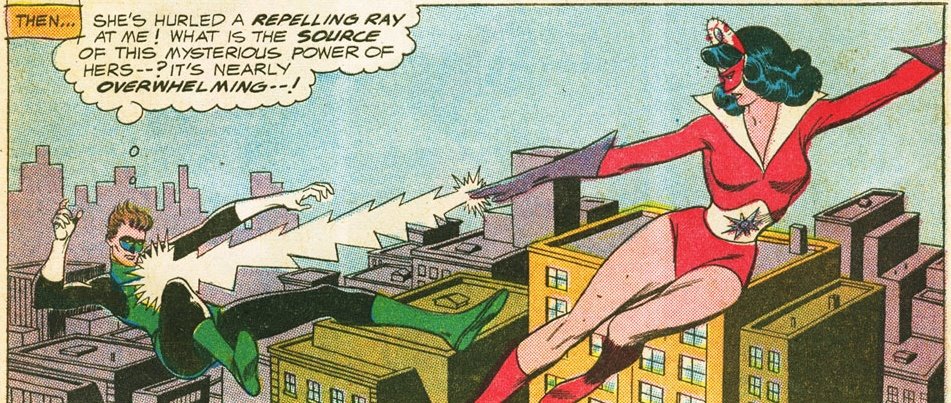
Remember back when that hideous female Star Sapphire costume debuted and DC completely ignored our points about how horrible and sexist it and the entire Star Sapphire retcon was, but some of their artists acknowledged that the costume might not work for men because God forbid we see manflesh in comic books. (Shh, don't tell them about Hawkman or Namor.)
And how we all pointed out that it was stereotypical and fucking stupid that the Star Sapphire Corps that harnessed the energy of love was entirely female because not only does that box women into the sex class role, but it suggests that men are incapable of tapping into one of those basic seven emotions that Johns was pushing as the building blocks to all sentient life. (At least Ethan Van Sciver agreed on that)
GREEN LANTERN #57 Written by GEOFF JOHNS Art and cover by DOUG MAHNKE & CHRISTIAN ALAMY 1:10 White Lantern Variant cover by RYAN SOOK, FERNANDO PASARIN & JOEL GOMEZ BRIGHTEST DAY continues as what readers have been asking for finally arrives: a male Star Sapphire in the form of the Predator. But how is this entity unlike the others? And what does it want with Carol Ferris? Meanwhile, the White Lantern is defended by an unlikely hero… Retailers please note: This issue will ship with two covers. Please see the Previews Order Form for more information. On sale AUGUST 25 • 32 pg, FC, $2.99 US
Yes, that's right! DC has decided to introduce a male Star Sapphire, and not only that--he's the Predator! Meaning he's hosting that big lizardy entity that lived in the violet power battery, the equivalent of Ion or Parallax.
So not only can men tap into love and harness it, this one is actually better that any woman who makes up the... um... Well, I bet Carol beats his ass. Let's check out the character design!
...
What?
So he gets to be more in touch with the Violet and more powerful than all the women, and he gets to be fully dressed. Not just fully dressed, but hosting the embodiment of love and lust--the thing that is causing all of these really gorgeous alien women to run around with practically no clothes on--and he's covered head to toe in black with only purple accents. Oh, and he gets macho silver armor.
And a macho name like the Predator.
Yeah, that's just...
Yeah, just...
...
Fuck you, DC.
Yeah, I know the Predator is from the 80s Green Lantern stories and has historically worn silver armor on his shoulders, but you know what? Star Sapphire used to look like this:
Don't give me any shit about the costume being traditional.
You know what, I give up. I don't even have the interest left to rant. I could do 3400 words yesterday on the Sentry because right now I'm enjoying a lot of Marvel's output so I can actually give a shit about what's going on in that universe, but I'm past that point with DC. I'm finally dropping Green Lantern, and I'm down to maybe two or three DC books now, and DC used to be 90% of my pull list. This is not a boycott reesulting from outrage or protesting anything. I'm not trying to send a "shape up" message to DC by dropping the books. I'm just losing interest in the DC Universe.
I used to love DC, I was fanishly obsessed with the metaplot. Green Lantern in particular was pretty fucking awesome right after Rebirth, and during Sinestro Corps War and the the buildup for Blackest Night. I was having a blast during those company crossovers. Infinite Crisis, Seven Soldiers (which was worthy of being called an epic, a rare trait in pop culture), ONE YEAR LATER, 52, the Wonder Woman relaunch, the new Blue Beetle, joy at each renewal of Manhunter, Final Crisis, even freaking Countdown (where I was watching Kyle Rayner, Donn Troy, and freaking Jason Todd play off each other--if only they'd kept Ryan Choi with them). I was just devouring everything at DC.
But they lost me.
They lost me about the time it became clear that White Lanterns weren't going to be just as inherently bad as Black Lanterns and the potential moral about extremes being a bad thing--that had been building up by showing how surrender to a single emotion, and complete lack of emotion were all BAD--dissolved. They lost me when they decided Wonder Woman would make the best Star Sapphire out of the JLA. They lost me when they replaced Cass Cain with Stephanie Brown, making it so all of DC's derivative female characters are suddenly identical out of costume. They lost me when Hal Jordan stopped being punished for being an asshole. (that first year after Rebirth was priceless for this, as was some of the Blackest Night buildup, so I put it actually in JLA: Cry for Justice when he's an out of character asshole while other books tell us he's the moral high ground). They lost me when they said it was okay that Hal and Ray and Ollie can torture criminals. They lost me when Lian Harper was offed to send Ollie Queen and Roy Harper down story-arcs we saw resolved in the fucking 70s. They lost me when whoever was editing Blackest Night either didn't read the script aloud, or was actually able to say "White Power Battery" (yeah, that'll bring some fun visitors to this blog) with a straight face. They lost me when Kendra got dissolved in favor of Shiera, completely invalidating all of Kendra's story arc about being a different person (written by the same fucking guy who just up and replaced Kendra with Shiera), and Ryan was shoved aside and then slaughtered so that we can have Ray fucking Palmer as the One True Atom.
So yeah, I'm beyond ranting here. Next time you see me outraged, it'll probably be about Rogue or Quicksilver again. It's going to be a while, I think, before I can recapture my Care about what DC's up to.